Most people know their shingles are nailed to wood, but few think about that wood until a roofer says it needs replacing. That layer is the roof decking, and it's what holds the whole roof together. In some cases a roof replacement isn't as simple as removing the old shingles and putting on new ones, because the decking underneath is damaged. Here's what roof decking is, why it fails, and why your roofing company may recommend new decking for your home.
What roof decking is and why it matters
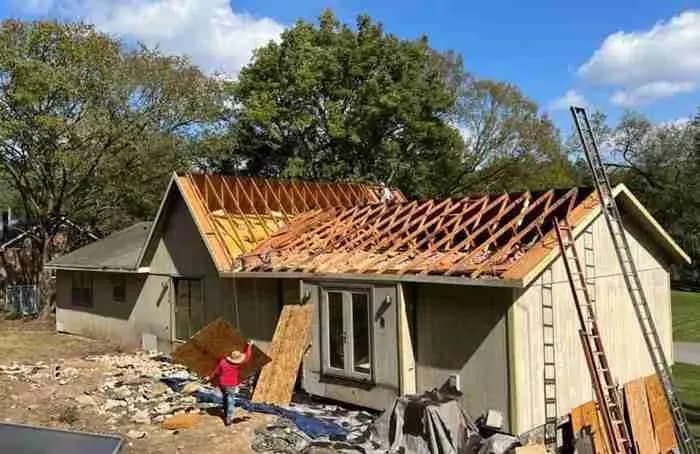
Roof decking, also called sheathing, is the layer of boards fastened across the rafters or trusses. Today that's usually plywood or OSB (oriented strand board). Older homes may have plank decking made of individual boards, sometimes with gaps between them. Underlayment, flashing and shingles are all fastened to the deck, so if the wood is soft, rotten or weak, nothing on top of it can perform the way it should.
Nails need solid wood to hold. Shingles nailed into spongy or delaminated decking can pull loose in the wind, and soft spots let the roof flex and crack. That's why the condition of the deck matters as much as the shingles you pick.
Roof rot and long-term water damage
Roof rot is a general term for water damage under the shingles and underlayment that reaches the roof deck and sometimes the rafters. When wood stays wet for long periods, it begins to rot, the same way a fallen tree breaks down in the woods. The difference is that your roof needs that wood to stay strong. If the decking, the rafters or both are compromised, they need to be replaced.
The usual sources are slow leaks that go unnoticed for months: a failed pipe boot, worn flashing at a chimney, or a valley that has been letting water in a little at a time. Poor attic ventilation adds to it by trapping humid air against the underside of the boards. Our post on the importance of roof flashing explains one of the most common culprits.
Pest damage
Termites get most of the attention, but carpenter bees do significant damage to untreated wood throughout Tennessee, including rafters and fascia boards. When a rafter has to be replaced, the decking over it has to come off as well. Squirrels, raccoons and other animals can also chew or tear through more than shingles, opening paths for water that eventually ruin the deck.
Storm damage
Storms are the most obvious reason we replace decking. When a tree or a large limb comes through a roof, the whole roofing system in that area usually needs replacing, from the insulation up to the shingles. Storm damage can also lead to new decking without anything punching through. Wind can lift shingles and let rain in for weeks before anyone notices, and that water weakens the boards enough that replacing them is the right fix.
If a storm is behind the damage, your homeowners insurance may help cover it. See our guides to storm damage roof repair and roof insurance claims for how that process works.
Warning signs your roof decking may be failing
You can't see the deck from outside, but it often gives clues:
- A sag or dip in the roofline, or boards that bow between rafters when you look from the attic.
- Soft or spongy spots when a roofer walks the roof.
- Daylight showing through the boards in the attic.
- Dark stains, mold or a musty smell on the underside of the decking.
- Shingles that keep blowing off in the same area, which can mean the nails aren't holding in weak wood.
- Water stains on ceilings below a spot that has leaked before.
Any of these is worth a roof inspection. Caught early, a few bad boards are a small part of the job.
Why we check the roof decking on every replacement
The only way to see the true condition of the decking is to remove the old shingles. That's one reason we do full tear-off replacements instead of nailing new shingles over old ones. Our post on tear off vs overlay explains the other reasons.
Here's how we handle decking on a residential roof replacement:
- Before the job, your written proposal states possible decking costs up front, including the price per board if boards need replacing, so nothing is a surprise halfway through.
- Once the old roof is off, the crew checks the deck and replaces any soft or rotted boards at the price in your proposal.
- We photograph the decking problems we find and show you, so you can see why the work was needed.
New decking also gives the new roof a solid, flat surface, which helps the shingles lie right, seal properly and qualify for the manufacturer's warranty coverage.
Let us give you a free roof replacement quote
If you know it's time for a new roof, or you have storm damage or another insurance claim, Mobley Brothers Roofing & Renovation can help. We'll give you a free roof replacement quote and tell you whether we think your decking needs attention. For a replacement, we measure from satellite imagery, send a written proposal, and look at the roof in person before install day, or sooner on request.
Call our Lebanon office at (615) 455-3131 for Middle Tennessee or our Knoxville office at (865) 205-0800 for East Tennessee, or request your free quote online. Both offices are BBB accredited with an A+ rating.
Request a free estimate
A few details help us send the right person. If water is coming in right now, call instead.